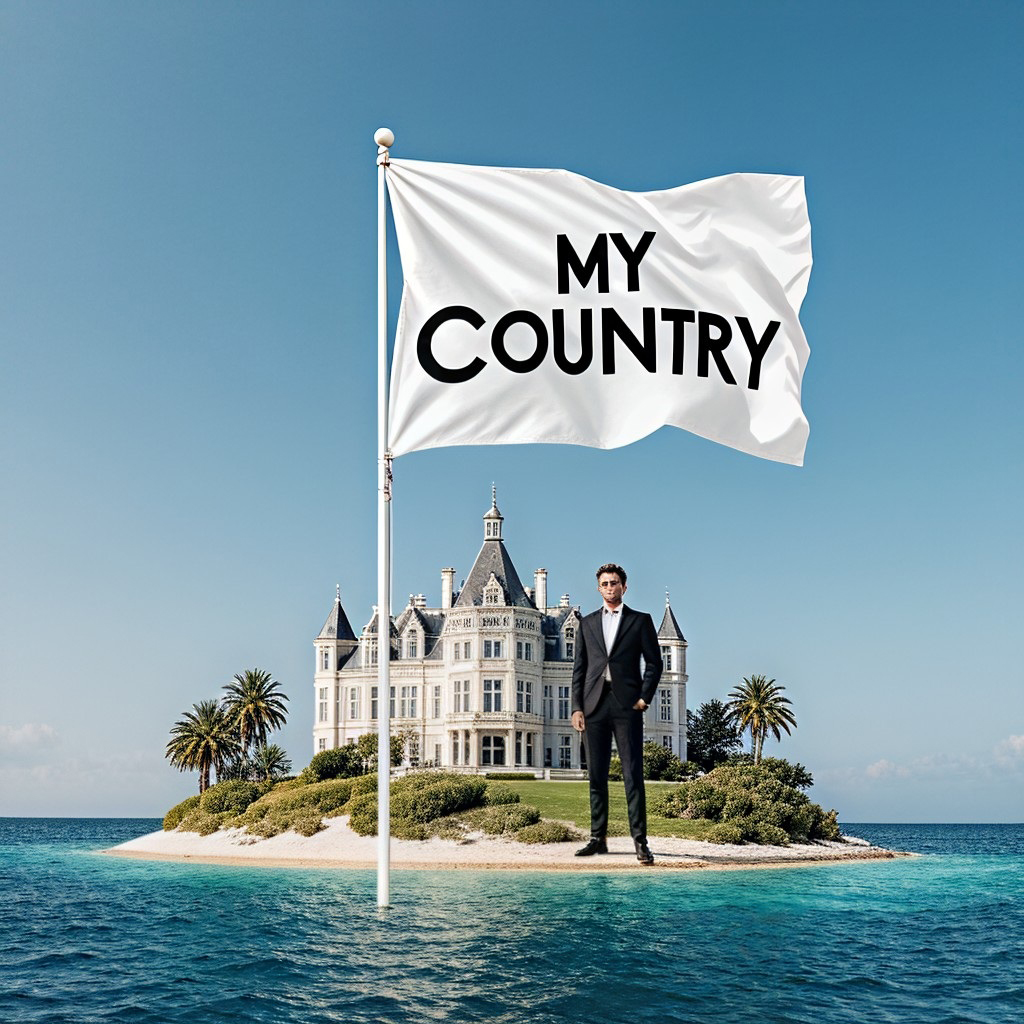
Buying Private Islands vs Micronational Declarations.
This is a fascinating and complex topic that blends real estate, law, fantasy, and human ambition. Let's break down the weird world of buying private islands and declaring your own nation.
It's crucial to understand that these are two very different concepts, often confused:
Buying a Private Island: A legal real estate transaction.
Declaring a Micro-nation (Micronation): A symbolic, legal, or political act that is almost never recognized by the world.
Part 1: Buying a Private Island (The Reality)
This is the more straightforward part. When you buy a private island, you are purchasing a piece of real estate that happens to be surrounded by water.
How it Works:
It's Just Real Estate: You aren't buying a "country." You are buying land within the territorial waters and legal jurisdiction of an existing country (e.g., Canada, the Bahamas, Fiji, Sweden). The laws of that nation apply. You must get building permits, pay property taxes, and follow their regulations.
The Challenges:
Cost: Beyond the purchase price, development costs are enormous. You need to bring in everything: materials, labor, power (solar/generators), water (desalination/wells), and waste management.
Logistics: Everything is harder and more expensive. Forget Amazon Prime delivery.
Isolation: You are responsible for your own security, medical emergencies, and maintenance.
The Allure: The ultimate privacy, exclusivity, and the dream of creating your own perfect paradise, entirely tailored to your desires.
In short: Buying an island makes you a lavish landowner, not a head of state.
Part 2: Declaring a Micro-Nation (The Fantasy & The Fight)
This is where things get weird. A micronation is a political entity that claims to be an independent nation or state but is not recognized by world governments or major international organizations like the United Nations.
People declare micronations for many reasons: political protest, artistic expression, personal amusement, or as a quirky legal experiment.
How Do You Even "Start" a Micronation?
The Montevideo Convention of 1933 outlines the criteria for statehood under international law. A micronation attempts to meet these:
A Defined Territory: You need land to claim. This is where private islands often come in.
A Permanent Population: That's usually just you, your family, and maybe some friends or online "citizens."
A Government: You are probably the King, Queen, Emperor, or President.
The Capacity to Enter into Relations with Other States: This is the biggest hurdle. No real country will sign a treaty with you.
Famous Examples of Micronations:
The Principality of Sealand: Perhaps the most famous. A World War II sea fort off the coast of England. Claimed by Paddy Roy Bates in 1967. It has a fascinating history involving armed raids, a constitution, and even its own currency. It's the gold standard of micronational persistence.
The Republic of Molossia: A hilarious and beloved micronation founded by Kevin Baugh on his property in Nevada, USA. It has a space program, a navy (an inflatable boat), and its own time zone. It's primarily a fun family project and a tourist attraction.
The Principality of Hutt River: (Now defunct) Was declared by a farmer in Australia to avoid wheat quotas. It operated for 50 years as a tourist attraction before finally dissolving and paying back taxes to the Australian government.
The Conch Republic: Key West, Florida, declared itself independent from the US in 1982 as a protest against a US Border Patrol blockade. It's now a massive tourist gimmick, but it made its point brilliantly.
The "Island" Connection: Terra Nullius
The most tempting way to declare a micronation is to find Terra Nullius—land not claimed by any sovereign state. This is nearly impossible in the 21st century.
Artificial Islands: Some have tried to build structures in international waters. However, the UN Convention on the Law of the Sea (UNCLOS) states that artificial islands do not constitute territory and do not have territorial waters. They remain under the jurisdiction of the country of the builder's nationality.
Silt Islands/Shifting Sandbars: Some micronations have been declared on tiny, newly formed silt islands in rivers between borders (e.g., the Kingdom of Enclava between Croatia and Serbia). These are often legally ambiguous but are usually absorbed or ignored by the surrounding nations.
The Blurred Line: When a Private Island "Becomes" a Micronation
This is the core of the fantasy. Someone buys a private island and, as a form of theater or a serious (but futile) legal challenge, declares it independent.
Buying Private Islands vs Micronational Declarations.
The Reality Check: The moment you stop paying property taxes to the country that legally owns the island, they will take action. This could mean fines, a lien on the property, or even having your ownership revoked. If you claim sovereignty, their navy doesn't need to invade; they just need to send a tax collector and a court order.
It's a Performance: For almost all, declaring your private island a micronation is a fun gimmick. You can design flags, print passports, mint coins, and appoint your friends as ambassadors. It's a creative and social hobby, not a path to actual statehood.
Buying a private island and declaring a micronation are two separate dreams that sometimes intersect:
The Private Island is a financial and logistical challenge—a test of your wealth and ability to build a paradise within an existing nation's rules.
The Micronation is a legal and social challenge—a test of your creativity, your understanding of international law, and your ability to build a compelling narrative or community.
The allure is fundamentally human: the desire for absolute freedom, control, and the chance to leave your mark on the world by creating something entirely your own, even if the world at large never has to take it seriously. Visit www.epcasabyowner.com and find your dream home in El Paso, TX.