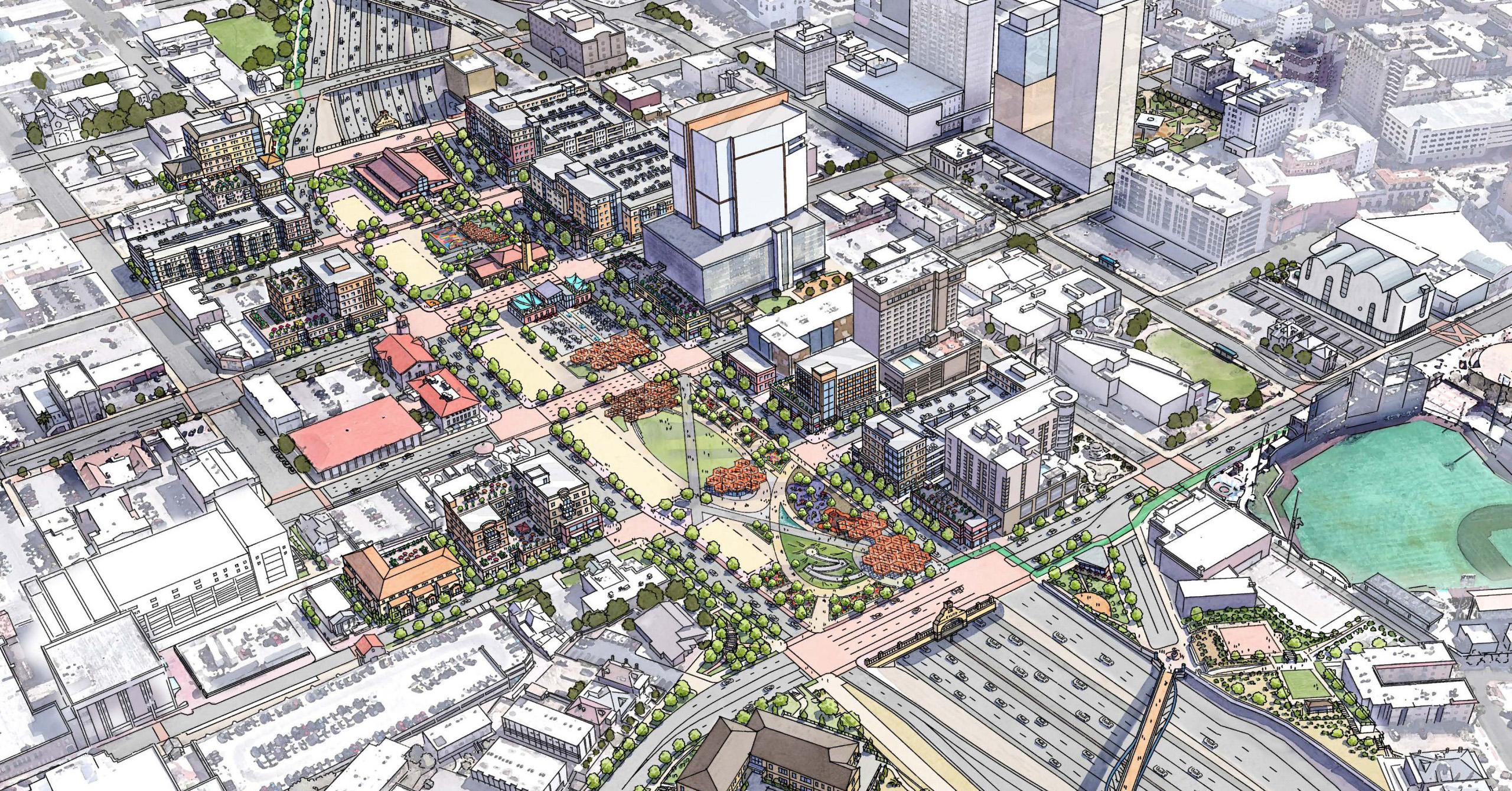
El Paso Downtown Deck Plaza Taxpayer Implications.
The Downtown Deck Plaza project is one of the most significant and debated public infrastructure projects in recent El Paso history. Here’s a breakdown of the project itself and its implications for taxpayers.
What is the El Paso Downtown Deck Plaza Project?
The project, officially known as the "Downtown 2015 Plan" or "Civic Center Deck Plaza," is a massive public infrastructure initiative. Its core component involves building a massive concrete "deck" or platform over a large sunken section of the I-10 freeway (between Raynolds and Santa Fe streets) that cuts through downtown El Paso.
On top of this deck, the city is creating a 6-acre public park and plaza with green spaces, walking paths, event areas, and aesthetic improvements. The goal is to "reconnect" the northern and southern halves of downtown, which were severed when the interstate was built decades ago.
Think of it as similar to the Klyde Warren Park in Dallas, which caps the Woodall Rodgers Freeway.
Key Project Components:
• The Deck: A structural concrete platform covering the freeway trench.
• The Park: A 6-acre green space on top of the deck for public use.
• Pedestrian Connectivity: Improving walkability between the El Paso Convention Center, the
Arts District, the Judson F. Williams Convention Center, and the rest of downtown.
• Economic Catalyst: The city hopes the park will spur private investment, development, and
revitalization in the immediate surrounding areas.
Implications for Taxpayers:
The implications for taxpayers are multifaceted, involving significant financial costs, potential long-term benefits, and ongoing debates.
The Financial Cost & Direct Burden.
This is the most direct implication. The project is expensive, and taxpayers are funding it.
Original Cost: Initially estimated at around $50-60 million.
Current Cost: The projected cost has ballooned to approximately $291.9 million due to inflation, design changes, and rising construction costs.
Funding Source: The project is primarily funded through voter-approved debt.
In 2012, voters passed a quality of life bond initiative, which included $180 million for "downtown improvements," with the deck plaza as its centerpiece.
The remaining funding comes from other city capital funds and a $20 million grant from the U.S. Department of Transportation (TIFIA loan).
Debt Servicing: The money from the bond is not free cash. The city must pay it back with interest over many years. This repayment comes from the city's general fund, which is primarily funded by property taxes and sales taxes. Therefore, taxpayers are directly responsible for servicing this debt.
Potential Long-Term Benefits (The "Return on Investment")
Proponents argue that while the upfront cost is high, the project will ultimately provide a positive return for taxpayers through economic development.
Increased Property Values: A more attractive and connected downtown is expected to increase property values in the surrounding area.
Higher Tax Revenue: As property values rise and new private developments (hotels, offices, apartments, retail) are built around the plaza, the city will collect more property and sales tax revenue. This new revenue can then be used to fund city services.
Job Creation: The construction phase creates jobs, and the long-term development it aims to spur would create permanent jobs.
Quality of Life: It provides a new, major public space for events, gatherings, and recreation, improving the overall quality of life, which can help attract and retain businesses and residents.
Ongoing Maintenance Costs.
A crucial implication that is often overlooked is operational and maintenance costs. The park is not free to maintain once it's built. Taxpayers will be responsible for the ongoing costs of:
Landscaping and irrigation
Security and policing
Utilities (lighting, etc.)
Repairs and upkeep
These annual costs will come out of the city's parks or general fund budget indefinitely.
Risk of Underperformance
The biggest risk for taxpayers is that the projected private development and economic boom do not materialize as quickly or as robustly as projected. If the plaza fails to attract significant new investment, the city will be left with high debt payments and maintenance costs without the corresponding increase in tax revenue to offset them. This would make it a net financial loss.
The El Paso Deck Plaza project is a bold bet by the city using taxpayer money. The implication for taxpayers is a substantial financial commitment today in the hopes of generating a stronger economic base and a better downtown for tomorrow. The ultimate judgment on whether it was a wise use of funds will depend on whether the long-term economic benefits promised by its supporters eventually outweigh the very high initial and ongoing costs.
Visit www.epcasabyowner.com and find your dream home in El Paso, TX.