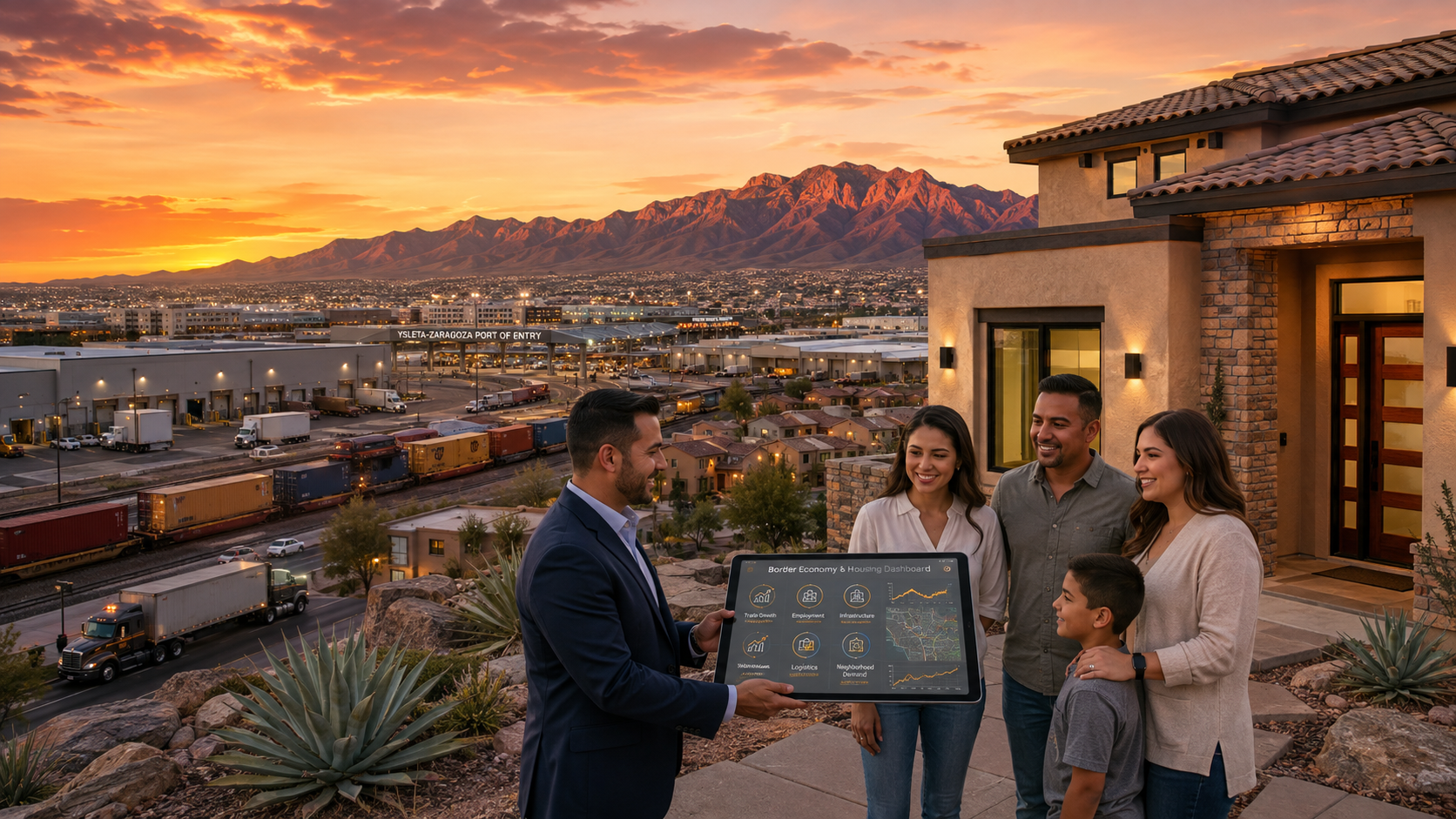
How Border Trade Influences Home Prices
Border trade isn't just about trucks crossing international bridges.
It quietly influences where people want to live, which neighborhoods appreciate faster, and even how much you'll pay for your next home.
Most buyers focus on interest rates.
Smart buyers also watch freight movement, manufacturing growth, logistics expansion, warehouse development, and international investment.
If you're buying in El Paso without understanding border economics, you're missing one of the biggest forces shaping the local housing market.
Let's explore what many buyers overlook.
Why Border Trade Matters More Than Most Buyers Realize
El Paso sits at one of North America's most important trade corridors.
As manufacturing expands in Ciudad Juárez and logistics companies invest across the Borderplex, thousands of employees, engineers, managers, transportation workers, healthcare professionals, and business owners create ongoing housing demand.
More jobs generally mean:
- Higher demand for homes
- Faster appreciation
- Lower inventory
- Stronger rental markets
- New commercial development
But not every neighborhood benefits equally.
That's where informed buyers gain an advantage.
Area #1: Homes Far From Major Employment Corridors
Why It Looks Like a Deal
These homes often have lower asking prices and appear to offer more square footage for the money.
Hidden Risks
Financial:
- Slower appreciation
- Smaller buyer pool during resale
- Higher transportation costs
Lifestyle:
- Longer daily commutes
- More fuel expenses
- Less convenience
2026 Market Insight
Companies tied to manufacturing, logistics, healthcare, customs brokerage, and warehousing continue concentrating employment near major transportation corridors. Buyers increasingly value shorter commute times.
What To Do Instead
Look for neighborhoods offering reasonable access to:
- I-10
- Loop 375
- Zaragoza Corridor
- Eastlake area
- Westside employment centers
- Downtown business district
Soft CTA
Curious which neighborhoods are benefiting most from Borderplex growth? Browse our latest market insights at EPCasaByOwner.com before making your next move.
Area #2: Homes Near Heavy Industrial Activity Without Residential Planning
Why It Looks Like a Deal
Prices can seem significantly below surrounding neighborhoods.
Hidden Risks
Financial:
- Limited future appreciation
- Reduced resale appeal
- Potential buyer hesitation
Lifestyle:
- Truck traffic
- Industrial noise
- Air quality concerns
- Less neighborhood walkability
2026 Market Insight
Industrial expansion isn't automatically positive for nearby residential properties. Communities with thoughtful buffers, parks, and mixed-use planning typically perform better long term.
What To Do Instead
Choose neighborhoods where residential development and commercial growth are balanced rather than competing.
Area #3: Older Homes Missing Infrastructure Improvements
Why It Looks Like a Deal
The purchase price looks attractive compared to newer communities.
Hidden Risks
Financial:
- Future repair costs
- Aging utilities
- Lower energy efficiency
Lifestyle:
- Older roads
- Limited neighborhood amenities
- Reduced buyer demand over time
2026 Market Insight
Infrastructure investment often follows economic expansion. Neighborhoods receiving roadway improvements, schools, utilities, and parks generally remain more competitive.
What To Do Instead
Research upcoming public infrastructure projects before purchasing.
A slightly higher purchase price today can translate into stronger appreciation tomorrow.
Area #4: Homes in Areas Experiencing Oversupply
Why It Looks Like a Deal
There may be plenty of inventory and motivated sellers.
Hidden Risks
Financial:
- Slower appreciation
- More competition when selling
- Longer days on market
Lifestyle:
- Less community stability
- Slower commercial investment
2026 Market Insight
Border trade creates demand—but demand isn't evenly distributed. Some submarkets absorb inventory much faster than others.
What To Do Instead
Study absorption rates, inventory trends, and population growth before choosing a neighborhood.
Area #5: Homes Purchased Solely Because They're "Cheap"
Why It Looks Like a Deal
Everyone loves saving money.
But low price alone isn't an investment strategy.
Hidden Risks
Financial:
- Weak appreciation
- Limited rental demand
- Smaller resale audience
Lifestyle:
- Fewer amenities
- Longer commutes
- Less neighborhood growth
2026 Market Insight
The strongest-performing neighborhoods often combine:
- Employment access
- School quality
- Infrastructure investment
- Retail growth
- Lifestyle amenities
What To Do Instead
Buy value—not simply a lower price.
Border trade rewards locations connected to economic activity.
Soft CTA
Need help identifying neighborhoods with the strongest long-term potential? Our local market knowledge can help you avoid costly mistakes.
Myth vs. Reality
Myth: Border trade only benefits commercial real estate.
Reality: Residential housing demand often follows employment growth.
Myth: Every home near industrial growth increases in value.
Reality: Planning quality matters just as much as proximity.
Myth: The cheapest home offers the best investment.
Reality: Appreciation depends more on location fundamentals than purchase price.
Local Insight: El Paso Market Angle
El Paso's housing market is unique because international commerce influences local demand differently than many Texas cities.
Neighborhoods with convenient access to employment centers, transportation infrastructure, healthcare facilities, retail growth, and quality schools tend to experience stronger buyer interest over time.
As cross-border commerce evolves, understanding the relationship between economic development and residential demand becomes a valuable advantage for buyers and sellers alike.
Buyer Checklist
Before buying, ask yourself:
✔ Is this neighborhood near growing employment?
✔ Are infrastructure improvements planned?
✔ How long is the daily commute?
✔ Is new commercial development nearby?
✔ How strong is resale demand?
✔ What are inventory levels?
✔ Does the neighborhood attract future buyers?
Frequently Asked Questions
Does border trade increase home prices in El Paso?
Yes. Strong trade activity supports employment growth, which can increase housing demand in many neighborhoods.
Which El Paso neighborhoods benefit the most from economic growth?
Communities with good transportation access, quality schools, growing retail, and expanding infrastructure often experience stronger appreciation.
Is buying near industrial areas always a bad investment?
Not necessarily. Well-planned mixed-use developments with residential buffers can perform very well.
How does international trade affect homebuyers?
Trade supports job creation, which increases buyer demand, rental demand, and long-term housing stability.
Should buyers monitor infrastructure projects before purchasing?
Absolutely. Infrastructure investment often signals future neighborhood growth and stronger resale potential.
Final Thoughts
Border trade is one of the biggest economic engines influencing El Paso real estate.
The buyers who understand where growth is happening—and why—are often the ones who build the most equity over time.
Whether you're buying your first home, upgrading, or investing, understanding these market dynamics can help you make a smarter decision.
Ready to Buy with Confidence?
Explore our latest homes for sale El Paso TX, discover local market insights, and learn more about El Paso real estate opportunities at www.epcasabyowner.com.
If you'd like personalized guidance on neighborhoods with the strongest long-term potential, contact us today. We're here to help you make informed decisions—not just complete transactions.