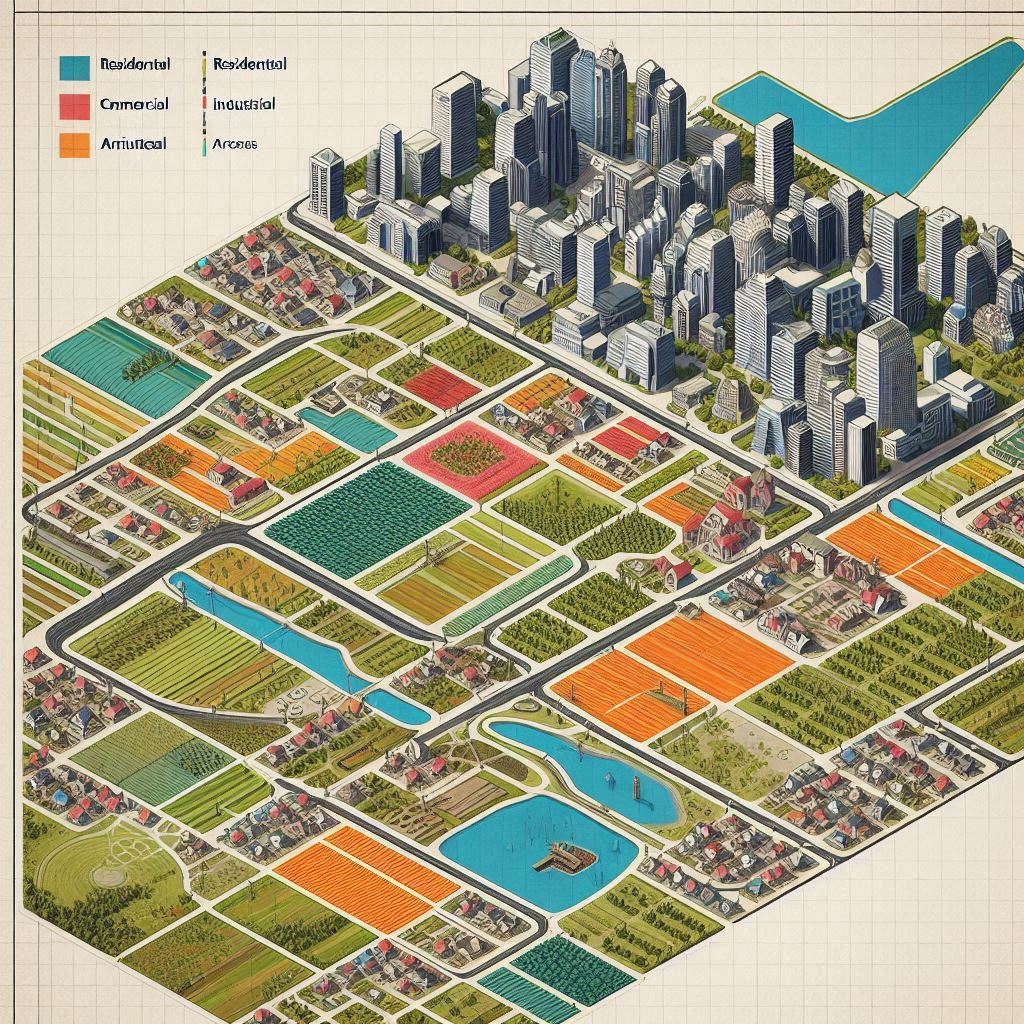
Zoning regulations play a crucial role in determining a property’s potential by dictating how land can be used, what can be built, and even its future value. Here’s how zoning laws can impact a property:
1. Restrictions on Land Use
Zoning divides areas into categories (residential, commercial, industrial, mixed-use, agricultural, etc.), which can:
· Limit Development Options: A property zoned residential-only can’t be converted into a retail store or factory without rezoning.
· Affect Investment Potential: A commercial-zoned lot may have higher value than a residential one due to income-generating potential (e.g., building a hotel vs. a single-family home).
· Prohibit Certain Activities: Even if a buyer wants to run a business from home, local zoning may forbid it.
2. Density & Building Requirements
Zoning laws regulate:
· Lot Size & Setbacks: How far a building must be from property lines.
· Height Limits: Restricting high-rises in low-density zones.
· Floor Area Ratio (FAR): The max buildable square footage relative to lot size.
· Parking Mandates: Requiring a certain number of parking spaces per unit.
Impact: These rules can make a property more (or less) lucrative. For example:
· A low-density zone may prevent a developer from building a high-profit apartment complex.
· A high FAR allowance could increase a property’s value for developers.
3. Impact on Property Value
· Upzoning (Increasing Density): If a city rezones an area from single-family to multi-family, land values often soar because developers can build more units.
· Downzoning (Restricting Use): If a residential area is rezoned to limit density, property values might stagnate due to reduced development potential.
· Historic Districts: Strict preservation rules can limit renovations but may increase prestige (and value) for certain buyers.
4. Delays & Costs of Rezoning
· Rezoning Applications: Property owners can petition to change zoning, but the process is often lengthy, expensive, and uncertain.
· Community Opposition: Neighbors may block rezoning efforts (e.g., "NIMBYism" against apartment buildings).
· Conditional Use Permits: Even if a use is technically allowed, additional approvals (e.g., for a daycare in a residential zone) add hurdles.
5. Future Development & Neighborhood Trends
· Zoning Changes Signal Growth: Areas rezoned for mixed-use or transit-oriented development (TOD) often attract investors.
· Infrastructure Plans: Zoning aligned with new highways, schools, or public transit can boost long-term value.
· Environmental Zoning: Wetland or floodplain restrictions can render land unusable for development.
6. Legal & Financial Risks
· Non-Conforming Uses: If a property’s existing use no longer complies with new zoning (e.g., a store in a newly residential zone), it may be "grandfathered" but lose value if redevelopment is restricted.
· Variances & Special Exceptions: These workarounds are time-consuming and not guaranteed.
Examples in Practice
✅ Positive: A vacant lot zoned for high-density mixed-use near a new subway line becomes a goldmine for developers.
❌ Negative: A homeowner wanting to subdivide a large lot finds it’s zoned for a minimum of 1-acre parcels, killing their profit plans.
How to Research Zoning for a Property
1. Check the local zoning map (usually on the city/county website).
2. Review the zoning code for allowed uses, setbacks, height limits, etc.
3. Consult a real estate attorney or land-use expert for rezoning feasibility.
4. Look for pending zoning changes in city council meetings or master plans.
Zoning can make or break a property’s potential. Savvy investors always verify zoning before purchasing to avoid surprises. Visit www.epcasabyowner and find your dream home in El Paso, TX.