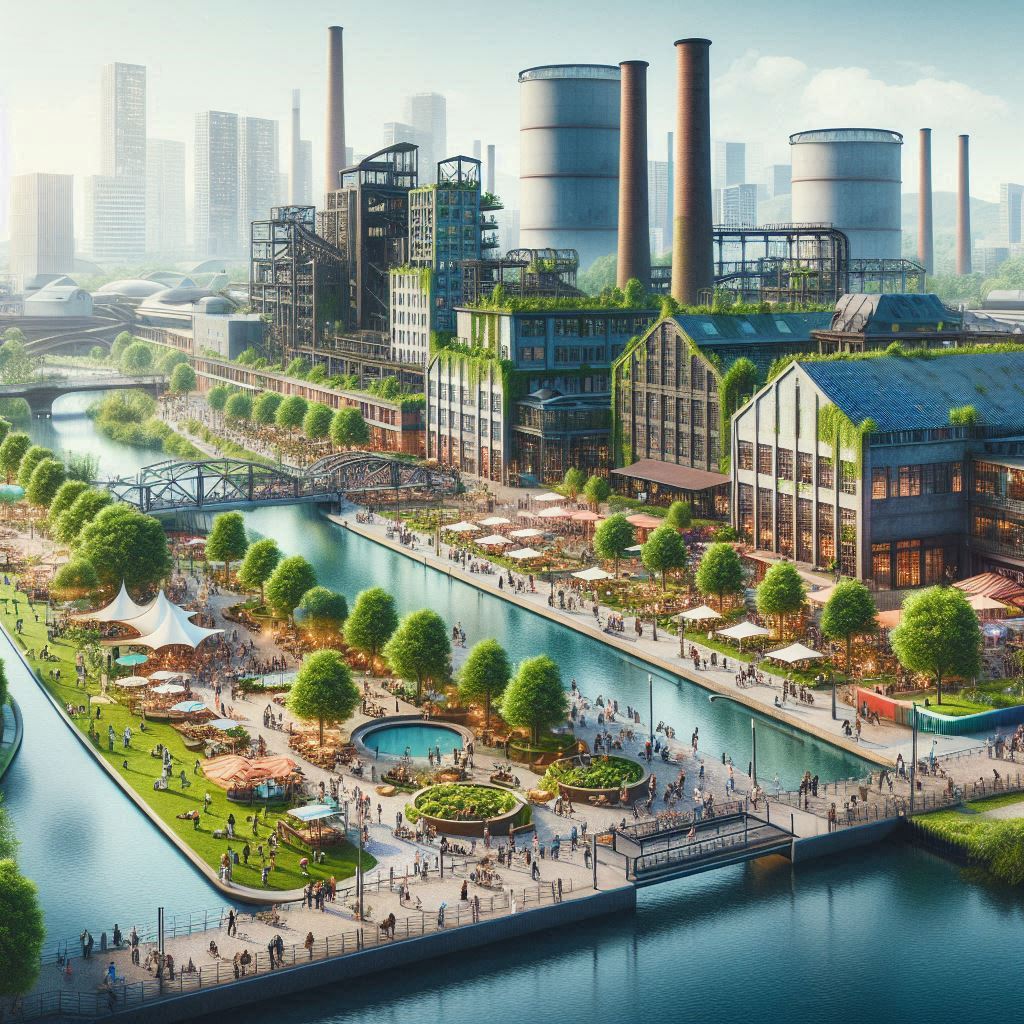
Investing in cities that have experienced significant industrial decline presents a unique mix of challenges and opportunities. These cities, often called "rust belt" or post-industrial cities, face economic and social hurdles but also offer potential for revitalization and high returns for strategic investors.
Challenges:
Economic Stagnation & Job Losses:
Many such cities suffer from high unemployment due to the collapse of traditional industries (e.g., manufacturing, steel, coal).
A shrinking tax base limits public investment in infrastructure and services.
Population Decline & Brain Drain:
Younger, skilled workers often leave for better opportunities, reducing the talent pool and consumer demand.
Aging populations increase dependency ratios, straining social services.
Infrastructure Decay:
Abandoned factories, outdated transportation, and vacant properties require costly redevelopment.
Environmental contamination (brownfields) from old industries can complicate redevelopment.
Weak Local Demand & Market Perception:
Investors may perceive these areas as high-risk due to past economic struggles.
Lower property values can deter large-scale commercial investments.
Political & Bureaucratic Hurdles:
Local governments may lack resources or expertise to facilitate redevelopment.
Zoning laws and legacy liabilities (e.g., pensions) can slow progress.
Opportunities:
Low Entry Costs & High Potential ROI:
Cheap real estate allows for large-scale acquisitions at low prices.
Public-private partnerships (PPPs) and tax incentives (e.g., Opportunity Zones in the U.S.) can enhance returns.
Adaptive Reuse & Innovation Hubs:
Old industrial buildings can be repurposed into lofts, tech incubators, or cultural spaces (e.g., Detroit’s resurgence).
Universities and startups may drive new economic clusters (e.g., robotics in Pittsburgh).
Government & Philanthropic Support:
Federal/state grants (e.g., U.S. CHIPS Act, EU Structural Funds) often target declining regions.
Foundations (e.g., Rockefeller, Knight) fund urban renewal projects.
Growing Niche Markets:
Affordable housing demand attracts developers as coastal cities become unaffordable.
Green energy investments (e.g., solar/wind farms on former industrial land) align with decarbonization trends.
Cultural & Tourism Revival:
Heritage tourism (e.g., Bethlehem Steel Stacks) and creative economies (e.g., art districts) can revitalize downtowns.
Remote work trends may attract digital nomads seeking affordability.
Key Strategies for Success:
Target sectors with growth potential (tech, healthcare, logistics).
Leverage public incentives (tax abatements, grants).
Engage community stakeholders to avoid gentrification backlash.
Focus on sustainability to attract ESG-conscious capital.
Examples of Successful Turnarounds:
Pittsburgh, PA: Shifted from steel to tech (Google, Carnegie Mellon).
Bilbao, Spain: Used the Guggenheim Museum to spur tourism.
Chattanooga, TN: Invested in fiber optics to become a "smart city."
While investing in post-industrial cities carries risks, those who adopt a long-term, innovative approach can benefit from undervalued assets, incentives, and emerging economic trends. The key is balancing profit motives with inclusive growth to ensure sustainable revitalization.
Visit www.epcasabyowner.com and find your dream home in El Paso, TX.