Published by Casa By Owner | Updated October 28, 2026
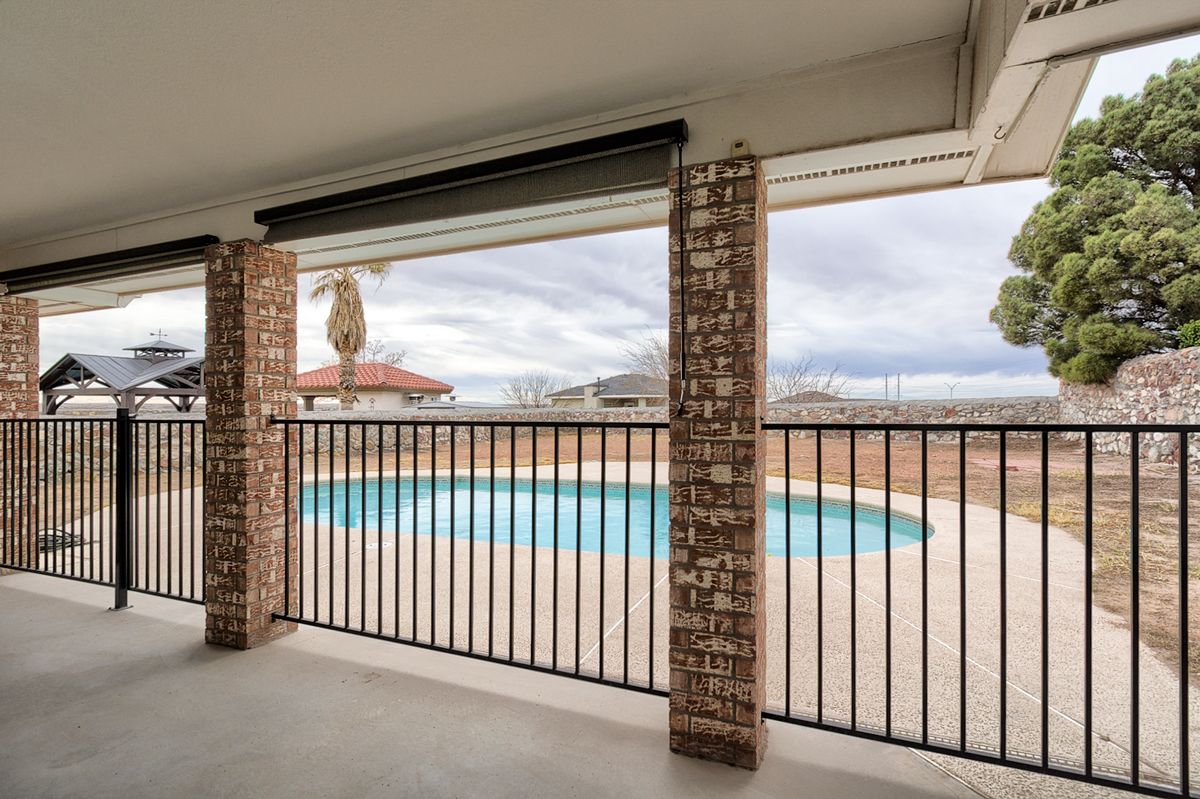
Answer first: You do not always need a new property survey to buy a resale home in El Paso or Horizon City. An existing survey may work when it accurately reflects the property and the title company and buyer's lender accept it with the required T-47 affidavit or T-47.1 declaration. A new survey may be needed when the old one is missing, rejected, or no longer matches improvements such as fences, additions, pools, or detached structures.
Casa By Owner prepared this 2026 guide for buyers and sellers across El Paso, Horizon City, and the Fort Bliss area. It explains the survey choices in the current Texas resale contract, what a survey can reveal, who may pay, and which deadlines deserve attention before closing.
What is a property survey?
A property survey is a professional drawing and measurement of land, boundaries, and visible improvements. Depending on the assignment, it can show lot lines, the house, garages, fences, walls, driveways, easements, utility areas, encroachments, and other features relevant to the title and lender review.
The current Texas One to Four Family Residential Contract says the survey must be prepared by a registered professional land surveyor acceptable to the title company and the buyer's lender. Texas surveying firms that offer services to the public must be registered and employ a Registered Professional Land Surveyor.
Buyers can verify surveyors and registered firms through the Texas Board of Professional Engineers and Land Surveyors.
Does every El Paso home purchase require a new survey?
No. For a resale transaction using the current TREC Form 20-19, the parties select one survey option in Paragraph 6C. The form recognizes an existing survey, a buyer-obtained new survey, or a seller-obtained new survey.
An existing survey is not automatically acceptable just because one is available. The title company and lender decide whether it satisfies their requirements. A survey also needs to match the same land being insured.
View the current TREC One to Four Family Residential Contract (Form 20-19), effective July 1, 2026.
How does the 2026 Texas resale contract handle surveys?
Option 1: The seller provides an existing survey
The contract provides a blank for the deadline after the effective date. The seller must furnish both the existing survey and either a T-47 affidavit or T-47.1 declaration to the buyer and title company.
If the seller fails to provide both documents within the agreed time, the current form says the buyer obtains a new survey at the seller's expense no later than three days before closing. If the title company or lender rejects the existing survey or affidavit or declaration, the party checked in the contract pays for the new survey.
Option 2: The buyer may obtain a new survey
The contract can give the buyer a stated number of days to obtain a new survey at the buyer's expense. Under the current form, the buyer is deemed to receive the survey on the actual receipt date or the stated contract date, whichever is earlier. Missing the survey does not create an automatic financing termination right.
Option 3: The seller obtains a new survey
The parties can choose a stated deadline for the seller to provide a new survey at the seller's expense.
Who pays is negotiable. There is no single rule that makes every Texas buyer or every seller responsible. Read the completed contract, not a generic checklist.
What are the T-47 affidavit and T-47.1 declaration?
These forms let a seller state whether the property has changed since the existing survey. The T-47 is an affidavit. The T-47.1 is an unsworn declaration that Texas rules allow in place of the notarized affidavit.
Changes that can matter include new rooms, garages, pools, decks, fences or walls moved near a boundary, replats, and new easements. A seller should not sign a survey affidavit or declaration without comparing the old survey with the property's current condition.
The Texas Department of Insurance title manual explains when a title company may accept an existing survey and the related affidavit or declaration for area and boundary coverage.
When is a new survey especially useful?
A buyer should discuss a new survey with the title company, lender, and real estate professional when:
- No existing survey is available
- The title company or lender rejects the old survey
- A fence, wall, addition, garage, pool, deck, shed, or driveway was added or moved
- The legal description or platted lot does not clearly match the property being sold
- A visible improvement appears close to a boundary or easement
- The property includes acreage, an irregular lot, or land outside a typical subdivision
- The buyer plans an addition, pool, garage, wall, or other boundary-sensitive project
A new survey can be valuable even when it is not strictly required, because it gives the buyer a current picture of improvements and boundaries before ownership changes.
What problems can a survey reveal before closing?
A survey may reveal:
- A fence or wall that does not follow the recorded boundary
- A driveway, shed, pool, or building that crosses a lot line or easement
- Utility, drainage, access, or other recorded easements affecting the property
- Improvements that differ from the seller's prior survey
- Overlaps, gaps, or shortages that need title review
The survey should be reviewed together with the title commitment. Under Paragraph 6D of TREC Form 20-19, the buyer's deadline to object to certain title or survey matters is written into the contract. Missing that deadline can waive some objection rights.
Does a survey replace a home inspection or appraisal?
No. These reports answer different questions:
- Survey: Where are the boundaries, easements, and visible improvements?
- Home inspection: What is the observed condition of the structure and systems?
- Appraisal: What value does the appraiser support for the assignment?
- Title commitment: What recorded requirements and exceptions affect the proposed title policy?
Fort Bliss-area buyers using VA financing can review Casa By Owner's VA appraisal versus home inspection guide. Buyers should also complete inspection and repair decisions before the deadline described in the Texas option-period checklist.
Does a survey prove an addition or fence was permitted?
No. A survey shows location and dimensions; it does not by itself prove that construction was permitted, meets zoning or deed restrictions, or complies with building codes. Permit records, subdivision restrictions, municipal requirements, and inspection documents are separate due-diligence items.
This distinction matters for enclosed patios, garages, and additions. See Casa By Owner's guide to enclosed patio square footage in El Paso.
How does a survey relate to title insurance?
Texas title policies normally include exceptions for boundary and area matters. If the title company accepts the survey and considers the risk insurable, it may amend the standard exception so that only "shortages in area" remain, subject to the title rules and any required premium for an owner's policy.
This is a title-company decision. Buyers should ask what survey-related exception will appear in Schedule B of the policy, what coverage is available, and whether a new survey would change the exception.
El Paso buyer survey checklist
- Read Paragraphs 6C and 6D of the completed contract immediately after execution.
- Calendar the survey-delivery and title-objection deadlines.
- Ask for the existing survey and T-47 or T-47.1 promptly if that option was selected.
- Walk the property and compare visible fences, walls, pools, additions, and sheds with the survey.
- Ask the title company and lender whether they accept the survey.
- Review the survey with the title commitment and exception documents.
- Raise questions before the contractual objection deadline.
- Keep the final survey with the closing and title-policy records.
Flood-zone review is separate from a boundary survey. Use Casa By Owner's El Paso flood-zone and insurance checklist for that part of due diligence.
El Paso seller survey checklist
- Locate the prior survey before listing
- Compare it with all current fences, walls, additions, pools, and detached structures
- Do not state that nothing changed if the property differs from the survey
- Gather permits, plans, and title documents for later improvements
- Discuss survey timing before accepting a short closing deadline
- Keep the signed contract's cost allocation clear
Accurate records can reduce last-minute surprises, but they do not replace advice from the title company, lender, surveyor, or attorney.
Frequently asked questions about Texas property surveys
How old can an existing survey be?
Texas does not set one universal age limit for every purchase survey. The title company and lender decide whether the document is acceptable, and the property's current condition must match it.
Can a seller use a T-47.1 instead of a notarized T-47?
Yes, the current TREC contract recognizes the T-47.1 declaration as an alternative. The seller should use the form requested by the title company and complete it accurately.
Does the survey show who owns a fence?
A survey can show a fence's measured location relative to the boundary, but ownership, maintenance, and legal rights may require review of deeds, agreements, restrictions, and title records.
Can a buyer object if the survey shows an encroachment?
Possibly. The contract's title-objection provision controls the deadline and process. The buyer should obtain transaction-specific advice promptly rather than assuming every encroachment creates a termination right.
Is a survey the same as a plat?
No. A recorded subdivision plat describes lots, streets, and easements for a larger development. A transaction survey depicts the specific property and visible improvements for the survey assignment.
Get help planning your El Paso home purchase
Casa By Owner helps buyers compare homes, organize due-diligence deadlines, and coordinate questions for the title company, lender, inspector, and surveyor. We serve El Paso, Horizon City, and Fort Bliss-area buyers.
Contact Casa By Owner before making an offer so the survey option, deadline, and cost allocation can be considered as part of the complete purchase plan.
This article provides general real estate information, not legal, surveying, title, lending, or engineering advice. Contract terms and title requirements vary. Consult the appropriate qualified professionals for your transaction.